What do living things look like, how do they work, and why?
We answer these questions with physics and AI. With elasticity, statistical mechanics, geometry and topology, we study how living things take shape, how systems behave far from equilibrium, and how cells, ants and bees act together. With AI, we predict how DNA folds, build physics-informed models of biological dynamics, and explore how AI can help students learn physics and mathematics.
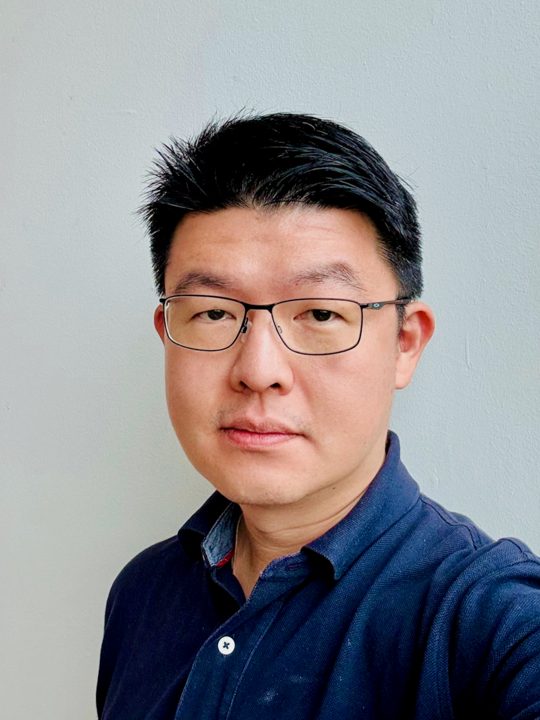 Led by Dr Ee Hou Yong, Senior Lecturer, Division of Physics and Applied Physics, Nanyang Technological University, Singapore
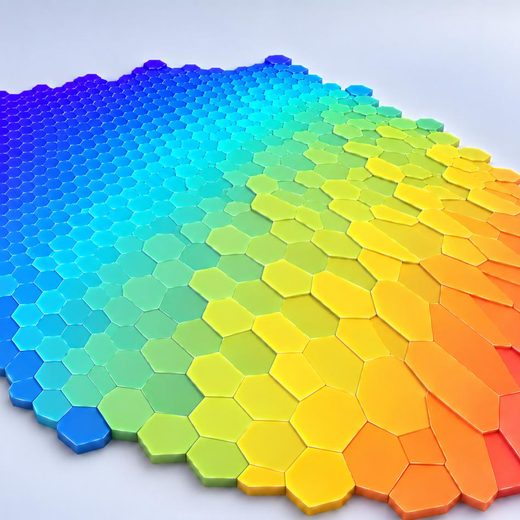 Order in growing cell sheetsSoft Matter, 2026
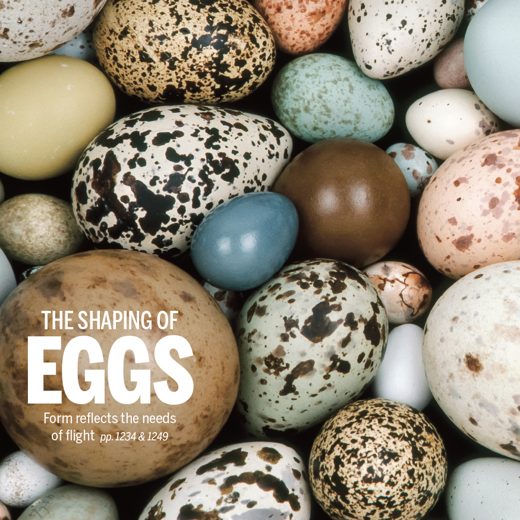 The shape of bird eggsScience, 2017
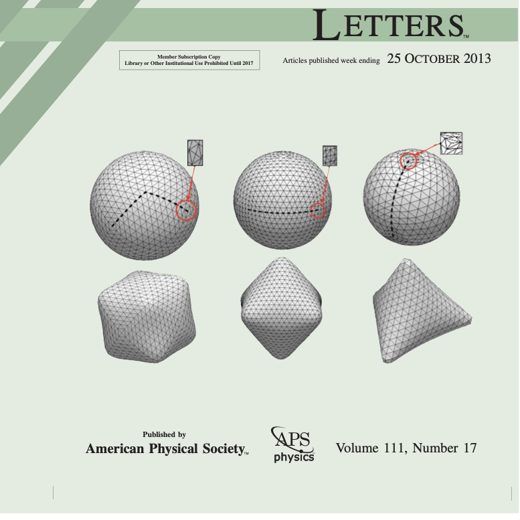 Elastic Platonic shellsPhys. Rev. Lett., 2013
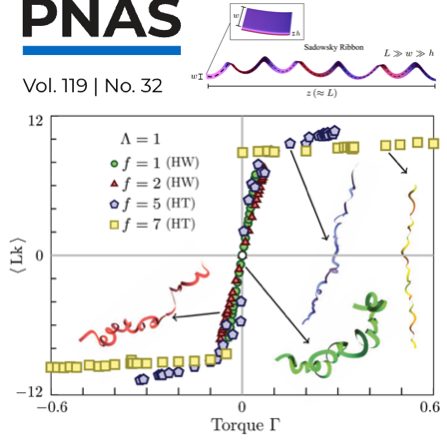 Fluctuating ribbonsPNAS, 2022
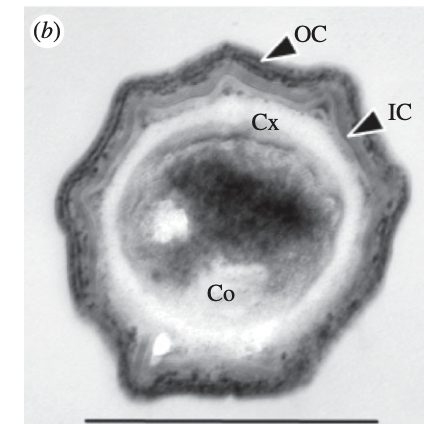 Wrinkled spore coatsJ. R. Soc. Interface, 2012
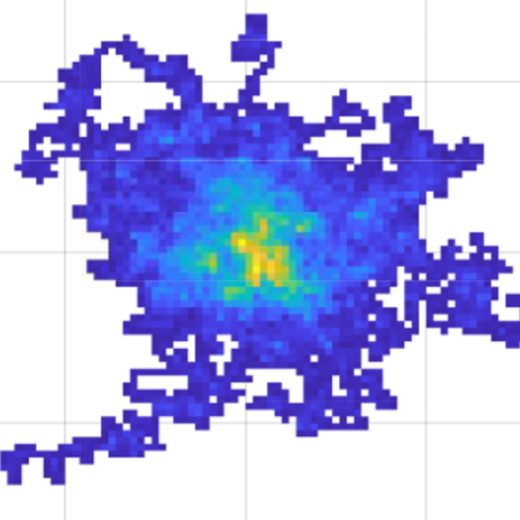 How ants foragePhys. Rev. E, 2023
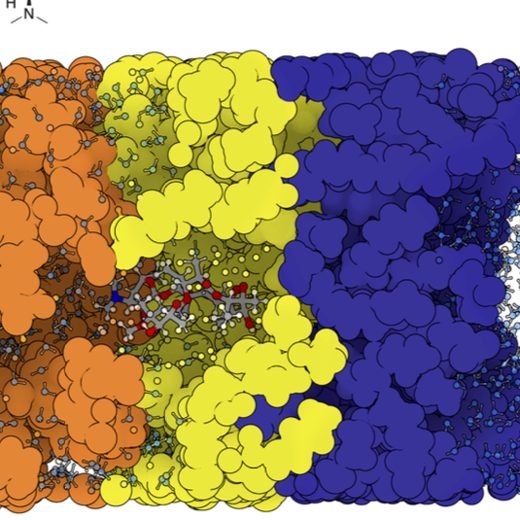 Antibiotics crossing membranesJ. Chem. Inf. Model., 2024
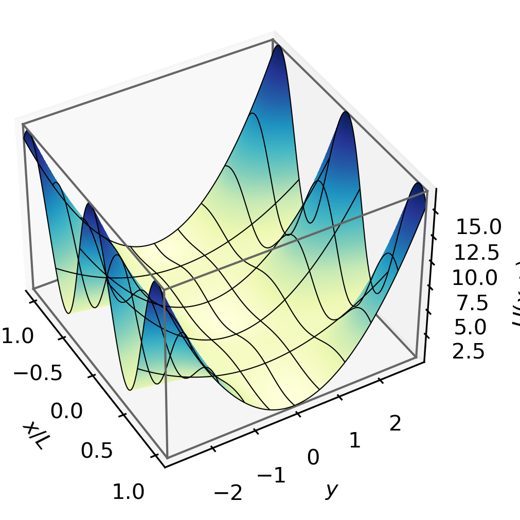 Diffusion on rough landscapesPhys. Rev. E, 2020
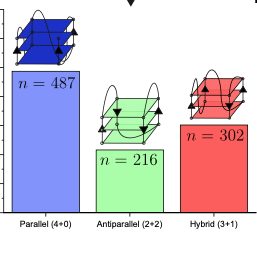 Machine learning how DNA foldsSci. Rep., 2024
News
Our paper “Emergence of hexanematic order in a growing confluent cell monolayer”, led by postdoc Too Hon Lin, was accepted in Soft Matter and selected for the front cover.
We were awarded a Ministry of Education Academic Research Fund Tier 1 grant, “Statistical Physics of Mechanobiology in Growing Tissues”, with Guillaume Thibault (School of Biological Sciences) and Endao Han.
PhD student Sidharth Komalan passed his qualifying examination, presenting his project “K-mer Based GNN for G-quadruplex Prediction”.
I gave an invited talk, “From Molecules to Superorganisms: Statistical Physics of Collective Behavior in Living Systems”, at Seoul National University, Korea, hosted by Prof Ho-Young Kim.
At the 2026 Asia-Pacific Summer School and Conference on Networks and Complex Systems, held at NTU, I organised the summer school, “Decoding Complexity: Networks, Data Science, and AI”, and co-chaired the focus session “Games on Complex Systems”.
I gave a talk, “Collective Behavior in Nature”, at the Soft Math Symposium 2026 at Harvard University, held in celebration of my PhD advisor Prof L. Mahadevan’s 60th birthday.
I gave an invited talk, “Emergence of Distinct Cell Morphology and Size of Confluent Cell Sheet”, at the American Physical Society Global Physics Summit 2026 in Denver, Colorado.
Earlier news
I gave an invited talk, “Topology, Geometry, and AI: New Frontiers in Understanding Biological Systems”, and taught at the 2026 NTU–Sorbonne University Joint Winter School on AI for Sciences.
“Hierarchical analysis of RNA secondary structures with pseudoknots based on sections” was published in PLOS Computational Biology.
“Foundations of Gerophysics”, which grew out of the Gerophysics 2025 meeting, was published in Aging.
Welcome to PhD student Jeremy Ong and postdoctoral fellow Zhang Xiang.
“G4STAB: a multi-input deep learning model to predict G-quadruplex thermodynamic stability based on sequence and salt concentration” was published in Bioinformatics.
I gave an invited talk at the 2025 High Performance Computing Users Symposium, “Simulations and Learning in Biological Systems: From Non-Equilibrium Ribbons to DNA G-Quadruplexes” (programme).
Welcome to PhD students Sidharth Komalan and Charal Khiewdee.
“Lyapunov–Schmidt bifurcation analysis of a supported compressible elastic beam”, with Prof L. Mahadevan of Harvard University, was published in Nonlinearity.
I gave an invited talk, “Understanding Complex Systems in Nature”, at the 25th International Conference on Computational Science, and co-organised the Asian Network of Complexity Scientists Workshop with Kang Hao Cheong.
I spoke at the inaugural Gerophysics 2025 conference, organised by Prof Brian Kennedy, A/P Jan Gruber and Dr Max Unfried. My talk, “Understanding Evolution, Ageing, and Repair using Complex Networks”, is on YouTube.
I presented “Deep Learning Framework for G-Quadruplex Stability Prediction” at the American Physical Society Global Physics Summit 2025 in Anaheim, California. The research was done by my students Donn Liew, Akesha Dinuli Dharmatilleke and Edwin See.